
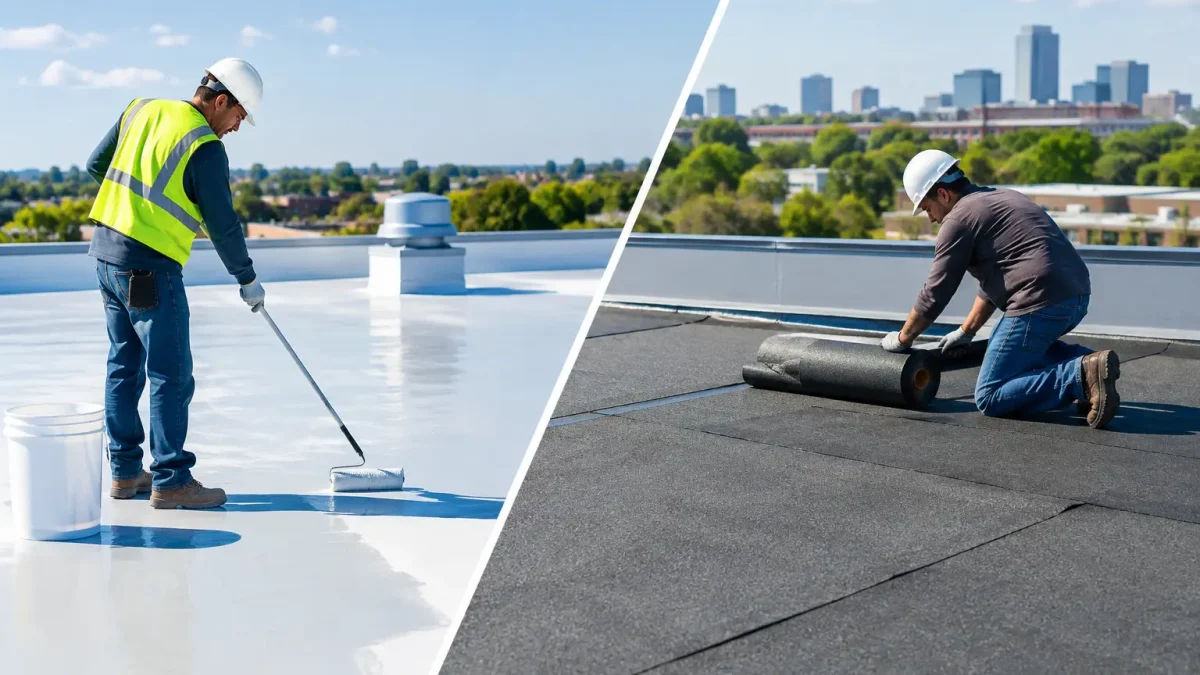
A roof can look worn long before it has reached the end of its serviceable life. It can also look acceptable from the ground while hidden moisture, deteriorated insulation, or failing seams are putting the building at risk. That is why the roof coating versus replacement decision should begin with a professional evaluation, not a quick estimate based on age alone.
For a facility manager, the right choice affects more than the roofing budget. It can determine whether tenants stay dry, inventory remains protected, operations continue without interruption, and capital dollars are used at the right time. For a homeowner, it can mean the difference between extending the life of a sound roof and delaying repairs that demand a full replacement.
Roof Coating Versus Replacement Starts With Roof Condition
A liquid-applied coating is a restoration system, not a cover-up for a failing roof. When properly specified and installed, a coating can create a continuous protective membrane over an existing low-slope roof. It may improve weather resistance, reflect sunlight, reduce thermal stress, and extend the life of a roof that still has a sound foundation.
Replacement is the better path when the existing system can no longer reliably support restoration. A new roof allows damaged materials to be removed, wet insulation to be addressed, substrate issues to be corrected, and a new roofing assembly to be installed with the proper drainage, flashing, and warranty requirements.
The distinction matters because coatings adhere to what is already there. If the roof deck is compromised, insulation is saturated, or the membrane has widespread failure, coating over those conditions can trap problems rather than solve them.
When a Coating May Be a Strong Option
Coatings often make sense for commercial low-slope roofs such as metal, modified bitumen, built-up roofing, and certain TPO, PVC, or EPDM systems. Suitability depends on the existing material, its condition, and the coating chemistry selected for it.
A roof may be a good coating candidate when it has limited, repairable leaks; intact insulation; serviceable seams and flashings; and no major structural concerns. The surface must also be prepared correctly. Cleaning, repairing splits and penetrations, treating rust on metal, reinforcing details, and verifying adhesion are essential parts of the work.
A coating can be especially practical for occupied buildings where a full tear-off would create disruption. Warehouses, retail centers, schools, healthcare properties, multifamily communities, and manufacturing facilities often need a solution that helps preserve daily operations. Because coatings are applied over a prepared existing roof, they can reduce tear-off waste and shorten the amount of time the roof is exposed during construction.
Cost is another reason owners consider restoration. A coating system generally requires less demolition and fewer replacement materials than a full reroof. That may make it possible to protect a building sooner while preserving capital for other facility needs. Still, the lowest initial cost is not always the lowest long-term cost. The coating needs to be appropriate for the roof, installed at the required thickness, and maintained over time.
When Replacement Protects the Property Better
Replacement is usually warranted when problems extend below the roof surface. Widespread saturated insulation, recurring leaks across multiple areas, severe membrane deterioration, failing deck conditions, or chronic ponding water can all signal that restoration is no longer the responsible choice.
Age can be a clue, but it is not a verdict. Some roofs perform well past their expected service life with consistent maintenance. Others need replacement earlier because of storm damage, poor installation, neglected repairs, foot traffic, or drainage issues. The key question is whether the existing assembly can provide a reliable base for a new protective layer.
A full replacement also gives property owners the chance to improve the roof system itself. A building with persistent drainage problems may benefit from tapered insulation. A facility with high interior humidity or energy demands may need a different insulation strategy. A roof that has repeatedly suffered seam failures may be better served by a system with different detailing and membrane performance.
For homeowners, replacement is commonly the better answer when shingles are broadly missing, curling, cracking, losing granules, or showing storm damage across multiple slopes. Coatings are not a substitute for a properly installed residential shingle roof. If hail, wind, or age has compromised the roof system, an inspection can help clarify whether repairs, an insurance-supported replacement, or a new installation is the appropriate next step.
What a Thorough Roof Evaluation Should Reveal
The decision should be based on evidence, not assumptions. A qualified roofing assessment looks beyond visible staining or a single active leak. Water often travels through insulation or along structural members before it appears inside the building.
For commercial properties, the evaluation should document membrane condition, seams, flashings, penetrations, drainage, rooftop equipment areas, prior repairs, and signs of trapped moisture. Infrared scanning, moisture testing, core samples, or other diagnostic methods may be appropriate when the roof’s condition is uncertain. The goal is to identify whether damage is isolated or widespread.
The roof deck also matters. A coating cannot correct rusted metal decking, deteriorated wood, or other structural concerns. Nor can it resolve a drainage design that leaves standing water in the same areas after every rain. Those issues need to be addressed before the roof can deliver dependable protection.
For residential roofs, an inspection should examine shingles or other roof coverings, valleys, vents, pipe boots, flashing, gutters, attic ventilation, and signs of storm impact. Homeowners should be cautious about deciding based only on a visible leak. Small leaks can indicate a localized repair, but they can also point to a larger issue caused by wind damage, failing flashing, or aging materials.
Budget, Operations, and Timing Matter Too
The roof coating versus replacement choice is partly technical, but it is also operational. A coating may offer a way to restore a qualified roof with less disruption, fewer tear-off expenses, and a more manageable project schedule. That can be valuable for facilities that cannot easily pause production, close retail space, or relocate occupants.
Replacement may require a larger initial investment, yet it can be the more predictable financial decision when the existing roof has extensive damage. Repeated spot repairs on a failing system can consume budget without restoring confidence in the roof. At a certain point, replacement stops being an expense to defer and becomes a way to control risk.
Timing should also be considered carefully. An active leak should be stabilized quickly, even if the long-term plan is still being developed. Emergency repairs can protect the interior while the owner reviews testing results, budget options, warranty requirements, and scheduling needs. Waiting through another storm season without a plan can turn a manageable roofing issue into damaged inventory, interior repairs, mold concerns, or operational downtime.
Avoid These Common Decision Mistakes
The most costly mistake is treating coating as a universal solution. A coating system is highly effective when matched to a qualified roof, but it should never be used to hide widespread failure. The opposite mistake is replacing a roof that could have been restored successfully with proper repairs and a well-designed coating system.
It is also risky to compare proposals only by price. Ask what preparation is included, how details and penetrations will be reinforced, how moisture is being evaluated, what thickness is specified, and what warranty coverage applies. For replacement, ask how wet materials will be identified, how drainage concerns will be handled, and how the work will be coordinated around building operations.
A clear scope protects the owner as much as the roof. It defines what will be repaired, what will be replaced, and what conditions could require additional work once the existing system is opened.
Choose the Option That Solves the Whole Problem
The right roofing decision is not the one that merely stops today’s leak. It is the one that gives the property a dependable path forward. A well-specified coating can preserve a sound roof and extend its useful life. A replacement can remove hidden risk and provide a fresh, warrantable system when restoration is no longer appropriate.
Platinum Roofing approaches that decision with the building, the people inside it, and the owner’s long-term plan in mind. A detailed inspection provides the information needed to act with confidence, whether that means targeted repair, a liquid-applied restoration system, or a complete replacement. Protect the roof before the next failure makes the decision for you.

 Capstone Marketing