
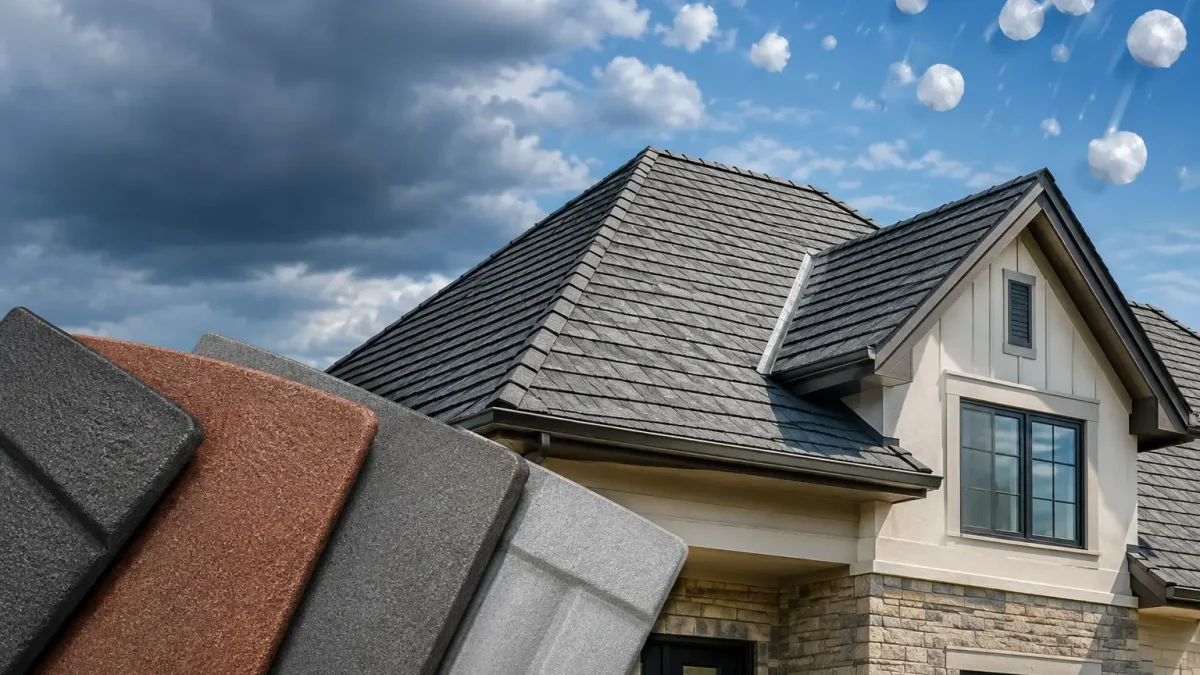
A roof can look perfectly intact after a hailstorm and still have damage that shortens its service life. Granules may be knocked loose from shingles, seams can be stressed, and small punctures in low-slope materials can become leaks months later. Choosing the best hail resistant roof options is about more than selecting the toughest material on a sample board. It means matching a roof system to the building, local storm patterns, budget, drainage, slope, and the level of protection the property needs.
For homeowners in Arkansas, Oklahoma, and Texas, hail resistance can reduce the chance that a single storm turns into an unexpected replacement. For commercial owners and facility managers, it can support business continuity, control maintenance costs, and help protect equipment, inventory, tenants, and operations below the roof deck.
Start With the Right Hail Rating
The most useful benchmark for residential roofing is the UL 2218 impact-resistance test. Materials are rated Class 1 through Class 4, with Class 4 representing the highest impact-resistance level. In the test, steel balls are dropped onto roofing material to simulate hail impacts. A Class 4 rating does not mean a roof is hail-proof, but it provides a meaningful measure of how well a product resists cracking or fracture under impact.
For homeowners, a Class 4 impact-resistant shingle is often the practical starting point in hail-prone areas. Some insurance carriers offer discounts for qualifying impact-resistant roofs, although requirements and discounts vary by policy and location. Confirm the documentation your insurer requires before installation, not after a storm claim.
Commercial roofing decisions require a broader review. A membrane’s thickness, reinforcement, attachment method, cover board, roof deck, drainage design, and rooftop traffic all influence its performance in a hail event. A strong system is built in layers, not defined by the membrane alone.
Best Hail Resistant Roof Options for Homes
Class 4 impact-resistant asphalt shingles
Impact-resistant architectural shingles are one of the best balances of affordability, appearance, and storm performance for many homeowners. They are widely available, work on most pitched residential roofs, and come in styles that resemble traditional dimensional shingles. The highest-performing products use modified asphalt or reinforced construction designed to absorb impact better than standard shingles.
Their major advantage is value. A Class 4 shingle roof generally costs less than metal, tile, or slate while providing a substantial upgrade in hail resistance. The trade-off is that shingles can still lose granules, suffer edge damage, or be affected by severe hail and high winds. Product quality and installation details matter, especially starter courses, flashing, ridge components, and ventilation.
Standing seam metal roofing
Standing seam metal is a strong choice for property owners who want long-term service life and a clean, low-maintenance appearance. Its concealed fasteners help limit exposed points of failure, and quality metal panels can resist fire, shed water effectively, and perform well against many hail events.
Metal is not automatically damage-free. Large hail can dent panels, particularly softer metals or lighter-gauge products. Whether a dent is cosmetic or affects performance depends on the panel profile, material thickness, coating, fastener system, and the storm itself. If appearance is a top priority, discuss dent resistance and finish warranties before choosing a metal system.
Tile roofing
Concrete and clay tile can provide excellent durability and a distinctive look, particularly on homes designed for tile’s weight and profile. Some tile products have strong impact ratings and can offer a long service life when installed correctly.
The key limitation is brittleness. Individual tiles may crack under a concentrated impact, and replacement work requires experienced installation to avoid disturbing neighboring pieces. Tile also places greater structural demands on the home than asphalt shingles. A qualified assessment should confirm that the framing, underlayment, flashings, and drainage details are suited to the system.
Synthetic slate and shake
High-quality synthetic slate and shake products can offer the visual character of natural materials with improved impact performance and less weight. Many are engineered for Class 4 impact resistance, making them worth considering for homeowners who want a premium look without natural slate’s structural burden or cedar’s maintenance needs.
These products tend to cost more than asphalt shingles, and performance varies widely by manufacturer. The best choice is a tested, warrantied system installed according to its specific fastening and accessory requirements.
Hail-Resistant Options for Commercial Roofs
Low-slope commercial roofs need a system-level approach. A warehouse, hospital, apartment complex, data center, or retail center may have different exposure, drainage challenges, insulation needs, and tolerance for operational disruption. The right answer depends on the building’s use and condition.
PVC roofing with a protective cover board
PVC is a heat-weldable single-ply membrane commonly used on commercial roofs where chemical resistance, seam strength, and long-term watertight performance matter. For hail-prone properties, a thicker PVC membrane paired with a high-density cover board can create a more impact-resistant assembly than a membrane installed directly over softer insulation.
The cover board is a critical detail. It helps distribute the force of hail impact and protects insulation from compression or puncture. While this assembly increases upfront cost, it may reduce repair exposure and extend the roof’s useful life.
TPO roofing with reinforced protection
TPO is a popular choice for commercial properties because it is reflective, cost-conscious, and available in a range of thicknesses. A properly specified TPO roof can perform well in hail conditions, especially when it includes a durable cover board and appropriate insulation design.
TPO quality is not one-size-fits-all. Membrane thickness, reinforcement, seam welding, fastening pattern, and the condition of the existing roof all affect outcome. Facility managers should avoid selecting a system on membrane price alone. The lowest initial bid may omit the protective layers that make the difference during a severe storm.
Modified bitumen and built-up roofing
Multi-ply systems such as modified bitumen and built-up roofing can offer substantial impact resistance because they use multiple layers of asphalt-based protection. They are often a strong fit for buildings that need a durable roof with proven performance and serviceability.
These systems can be heavier and more labor-intensive than single-ply membranes. They also require careful attention to flashing details, drainage, and maintenance. On the right building, their layered construction can be a practical defense against repeated weather exposure.
Metal roofing for commercial facilities
Metal roof systems are often a durable option for industrial buildings, warehouses, agricultural structures, and facilities with sloped roof designs. Like residential metal, commercial panels may dent in severe hail. However, a properly designed metal system can remain weather-tight even when cosmetic marks are visible.
Panel gauge, rib profile, substrate, coating, clip system, and roof geometry all deserve review. Where hail exposure is severe, building owners should weigh the aesthetic expectations of the property against metal’s long service life and low maintenance needs.
The Details That Make a Roof More Hail Resistant
Material selection matters, but roof performance often comes down to what is beneath and around it. On a residential roof, that includes decking condition, underlayment, ice and water protection where appropriate, flashing, ventilation, and correct nailing. On a commercial roof, it includes insulation, cover boards, membrane thickness, attachment, seams, edge metal, drains, and penetrations.
Drainage also deserves close attention. Hailstorms often arrive with heavy rain. A roof that resists impact but allows water to pond around drains, seams, or damaged areas still faces unnecessary risk. Keeping gutters, scuppers, drains, and downspouts clear is a practical part of storm readiness.
Workmanship is equally important. Even the best-rated product cannot compensate for improperly welded seams, poorly secured flashing, exposed fasteners, or neglected transitions around pipes and rooftop equipment. A roof should be installed as a complete system and maintained as one.
Make the Decision Before the Next Storm
The right roofing choice depends on the property, not just the forecast. A homeowner may find that Class 4 architectural shingles provide the most sensible protection for the budget. A commercial owner may benefit more from a PVC or TPO system with a high-density cover board, or from a multi-ply assembly designed for demanding conditions.
Before replacement, schedule a professional inspection that documents the current roof condition and identifies vulnerabilities such as aging flashings, soft insulation, ponding water, loose edge metal, or prior storm damage. Platinum Roofing LLC helps property owners evaluate those details, plan appropriate repairs or replacement, and respond quickly when storms put a roof to the test.
A hail-resistant roof is not a promise that weather will never cause damage. It is a better line of defense, built to give your home or business more time, more protection, and fewer surprises when the sky turns severe.


 Capstone Marketing