
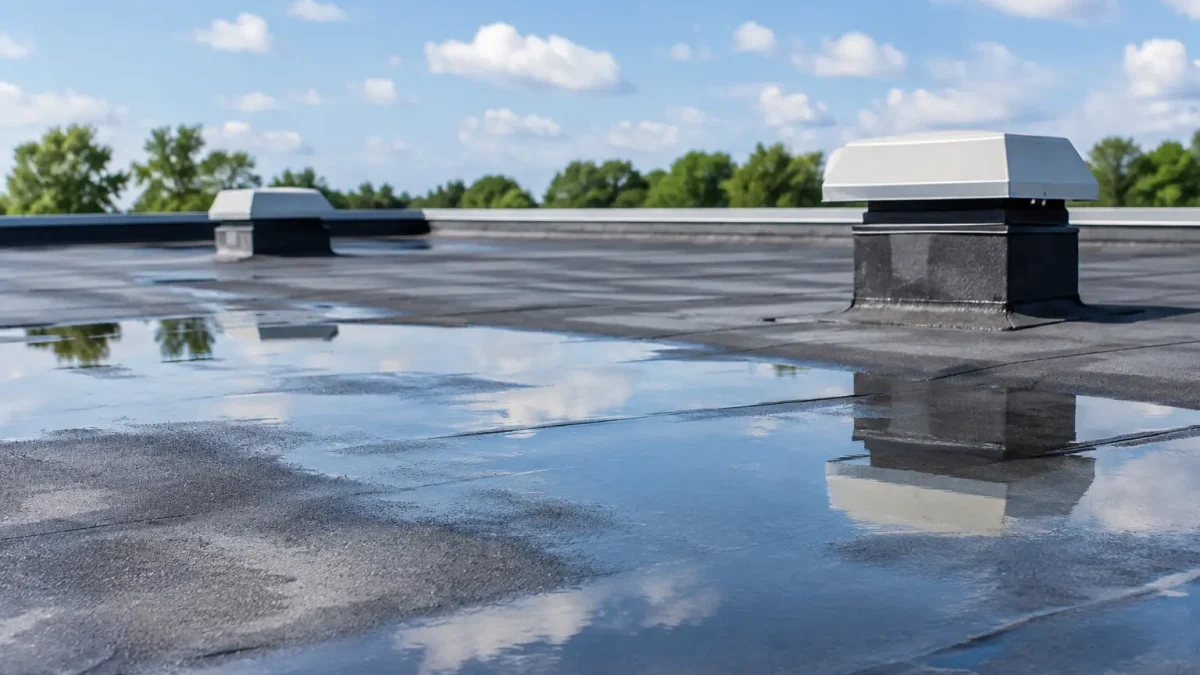
A shallow pool on a low-slope roof may look harmless from the ground, especially after a hard rain. But standing water adds weight, accelerates material wear, hides developing leaks, and can turn a manageable maintenance issue into an interruption for tenants, employees, inventory, or equipment. To prevent roof ponding, property owners need to address more than the water itself. They need to understand why it is collecting and correct the drainage path before the roof system is put under repeated stress.
For commercial facilities, the stakes can be especially high. A warehouse roof can hold water over insulation and decking for days. A healthcare, education, retail, or data center facility may have sensitive operations directly below. Even a small drainage deficiency can create larger risks when it is left in place through multiple storms.
What Roof Ponding Means for Your Building
Ponding water is generally water that remains on a roof 48 hours after rainfall under conditions that should allow the roof to drain. Some temporary standing water can occur after a heavy storm, particularly on broad low-slope roofs. The concern begins when water repeatedly settles in the same location or does not drain after weather has cleared.
Ponding is common on low-slope systems such as TPO, EPDM, PVC, modified bitumen, built-up roofing, and coated roof assemblies. These systems are designed for low-slope applications, but they still rely on intentional drainage. Water should move toward drains, scuppers, gutters, or edge drainage components rather than remain concentrated across the membrane.
The consequences depend on the roofing system, the depth and duration of the water, the roof’s age, and the condition of the substrate beneath it. On an otherwise sound roof, a small pond may be a maintenance concern. On an aging roof with open seams, deteriorated flashing, saturated insulation, or deck deflection, it can be a warning that repair is needed soon.
Standing water can also collect dirt and organic debris, which slows drainage further. Over time, that buildup can obscure defects and make inspections less reliable. In freezing conditions, trapped water introduces another concern: expansion and contraction around drains, seams, flashings, and rooftop penetrations.
Why Water Is Collecting in the First Place
The most effective solution depends on the cause. Clearing a clogged drain is worthwhile, but it will not solve a roof that has settled away from its drainage points. A professional inspection should look at the entire roof assembly and drainage layout rather than treating every pond as a surface-level issue.
Blocked drains, scuppers, and gutters
Leaves, packaging, gravel, branches, nesting material, and roof-surface sediment can block drainage openings. On large facilities, a drain may appear clear from above while the leader or outlet below is restricted. Water backs up, spreads across the roof, and can begin to enter at seams or flashing details that were never intended to stay submerged.
This is often the most straightforward cause to correct, but it requires consistent attention. Properties beneath trees, near construction activity, or exposed to windblown debris usually need more frequent service than buildings in cleaner, more protected locations.
Inadequate slope or poor drainage design
Low-slope does not mean no slope. Roofs need enough positive drainage to move water toward designated outlets. If the original design has too few drains, undersized scuppers, improper tapered insulation, or drainage points placed too high, recurring ponding may be built into the roof layout.
Correcting this type of issue can involve adding drains or scuppers, modifying edge conditions, or installing tapered insulation during restoration or replacement. Those measures require a more significant investment than routine cleaning, but they address the condition at its source.
Structural deflection and wet insulation
A roof deck can sag because of structural movement, long-term loading, moisture damage, or changes to rooftop equipment. Water then finds the low point, and every storm repeats the problem. Saturated insulation can worsen the cycle because it loses performance, adds weight, and may allow the roof surface to deform further.
This is why ponding should never be dismissed as strictly cosmetic. A qualified roofing contractor may recommend moisture investigation, core samples, infrared scanning, or coordination with a structural professional when the pattern suggests a deeper issue.
Membrane repairs that did not restore drainage
Patching a leak is sometimes necessary, especially after a storm or active water intrusion. Yet a repair that stops the immediate leak may not restore drainage. If the surrounding area remains low or the repair creates an abrupt transition that holds water, the same location can continue to deteriorate.
A good repair strategy protects the roof system and preserves water flow. That is particularly important for liquid-applied repairs and coating systems, where surface preparation and drainage conditions affect long-term performance.
How to Prevent Roof Ponding Before It Causes Damage
A proactive approach combines inspection, maintenance, and targeted capital planning. The right schedule varies by roof type, building use, surrounding conditions, and recent weather, but the basic priorities remain consistent.
Keep drainage paths open
Drains, scuppers, gutters, strainers, and downspouts should be checked on a schedule, not only after someone sees water on the roof. Remove debris from the roof surface as well as the drainage opening. Material that sits several feet away can wash into a drain during the next storm.
For many commercial properties, inspections in the spring and fall provide a useful foundation, with additional checks after high-wind events, hail, major rainfall, or nearby construction. Facilities with heavy tree cover or frequent debris exposure may need more frequent attention.
Do not overlook interior indicators. Water stains, musty odors, ceiling tile damage, rusting deck components, and unexplained humidity can signal that ponding has already contributed to a breach.
Inspect the roof after major weather
Storm response should include more than checking for obvious punctures. Walkable roof areas should be evaluated safely for standing water, displaced drain strainers, damaged flashing, membrane cuts, and debris accumulation. On roofs that cannot be safely accessed by on-site staff, arrange for a trained roofing professional to perform the inspection.
Document recurring pond locations with photos and notes. A pattern matters. If water appears in the same area after every rain, the condition is likely tied to slope, drainage capacity, or deck movement rather than a one-time obstruction.
Address small defects before water finds them
Standing water puts more time and pressure on seams, fasteners, penetrations, curbs, and flashings. A minor opening that might not leak during a brief rain can become a problem when water remains over it for days.
Preventive repairs may include resealing flashings, repairing membrane seams, replacing damaged drain components, reinforcing vulnerable transitions, or correcting localized surface defects. The best timing is before the roof is under active leak conditions, when the scope can be planned around building operations and weather windows.
Use restoration or replacement to correct chronic low areas
When ponding is widespread or recurring, cleaning and patching alone may only postpone the issue. Roof restoration can sometimes incorporate localized slope correction, replacement of wet materials, and a properly specified liquid-applied coating system. For roofs nearing the end of their service life, replacement may provide the opportunity to redesign drainage, add tapered insulation, and improve long-term performance.
There are trade-offs. A coating can be an excellent option when the existing roof is dry, structurally sound, and a good candidate for restoration. It is not a substitute for removing saturated materials or resolving major drainage deficiencies. Likewise, adding drains can improve drainage but may involve plumbing, structural, and operational coordination. The right choice should be based on the roof’s actual condition, not a one-size-fits-all product recommendation.
A Maintenance Plan That Supports Business Continuity
For facility managers and owners, roof ponding prevention belongs in the same conversation as uptime, safety, and budget predictability. A documented maintenance plan helps identify developing issues before they become emergency calls. It also creates a clear record of inspections, repairs, drainage cleaning, and storm-related findings that can support warranty compliance and long-range capital planning.
At a minimum, the plan should identify roof access procedures, drainage locations, known ponding areas, service history, and the responsible contact after a weather event. Buildings with multiple roof elevations, rooftop HVAC equipment, or complex drainage layouts benefit from a roof map that helps maintenance teams and roofing professionals communicate quickly.
Platinum Roofing approaches roof maintenance as ongoing property protection, not a one-time visit. An experienced inspection can distinguish between a blocked drain, a localized repair need, and a drainage problem that requires a broader solution – helping owners prioritize work with clarity.
When to Call for a Professional Inspection
Call for an inspection when water remains after 48 hours, when ponding areas appear larger than before, or when interior leaks develop near known low spots. Prompt attention is also warranted if the roof surface feels soft, drains repeatedly back up, or water is collecting near mechanical equipment, expansion joints, walls, or penetrations.
The most useful inspection does not simply confirm that water is present. It identifies where the water is entering, how it is moving across the roof, whether insulation or decking may be affected, and what level of repair will protect the building over time. That clear diagnosis gives property owners a practical path forward before the next storm tests the roof again.


 Capstone Marketing