
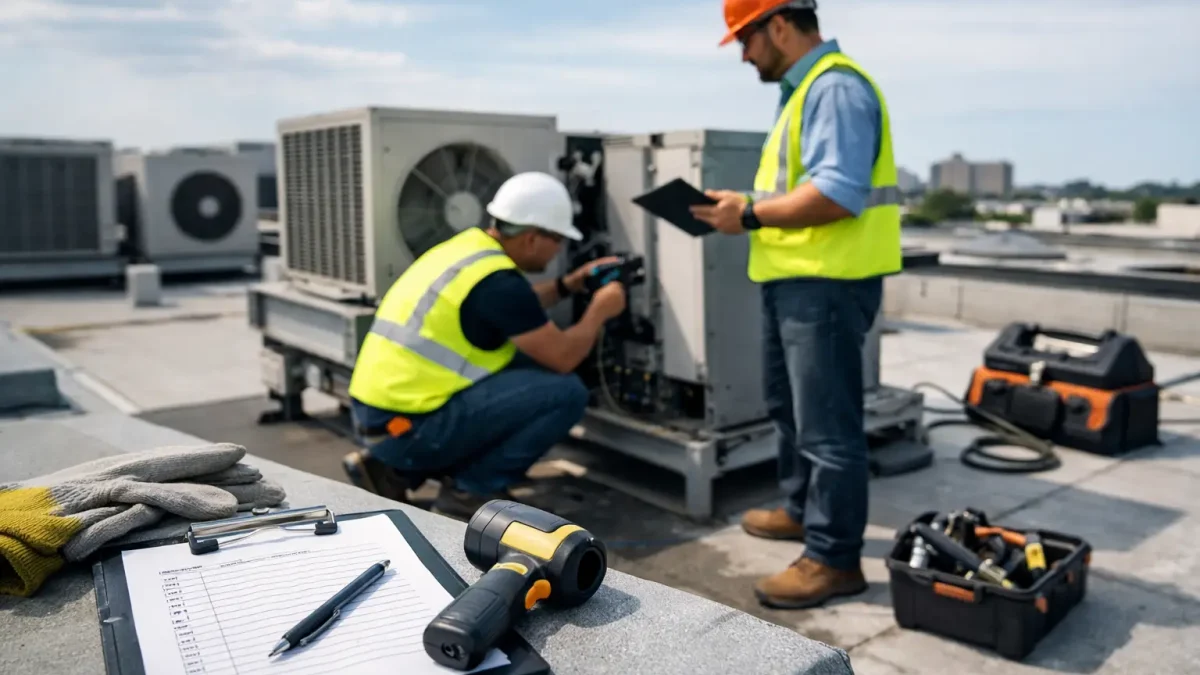
A small roof defect can become a business interruption quickly. Water that enters around a drain, curb, seam, or flashing may travel far from the visible stain before it reaches the interior. A commercial roof maintenance plan gives property and facility leaders a disciplined way to find those issues early, protect the roof investment, and keep tenants, employees, equipment, and operations safer.
For a warehouse, healthcare facility, retail center, school, data center, or multifamily property, maintenance is not simply a roofing task to check off. It is a practical part of risk management. The right plan accounts for the roof system, the building’s use, local weather, manufacturer requirements, and the consequences of downtime.
What a Commercial Roof Maintenance Plan Should Accomplish
A useful plan does more than schedule an occasional walk-through. It establishes a record of the roof’s condition, identifies repairs before they become emergencies, and helps ownership make informed budget decisions. It should also support warranty compliance when the manufacturer or installer requires documented inspections and timely corrective work.
The first step is understanding what is on the building. TPO, PVC, EPDM, modified bitumen, built-up roofing, metal, and liquid-applied systems each age differently and require system-specific attention. A qualified inspection should document the membrane or roof covering, flashings, penetrations, drains, edge details, rooftop equipment, prior repairs, and areas where water tends to collect.
That baseline matters. Without it, facility teams may be reacting to symptoms instead of tracking actual changes in the system. With it, they can distinguish between a minor maintenance repair and a condition that warrants restoration or replacement planning.
Set the Right Inspection Frequency
Most commercial roofs benefit from professional inspections at least twice each year, commonly in the spring and fall. The goal is to assess the roof before and after periods that can accelerate wear, including heavy rain, hail, high winds, extreme heat, freezing temperatures, and seasonal debris buildup.
Twice-yearly service is a starting point, not a universal answer. A roof with frequent foot traffic, HVAC work, grease exposure, rooftop solar, aging materials, complicated drainage, or a history of leaks may need more frequent attention. Buildings in storm-prone areas of Arkansas, Oklahoma, and Texas should also be checked after significant weather events, even if there is no visible interior damage.
A post-storm inspection is especially valuable because hail and wind damage can be subtle. Lifted seams, punctures, displaced metal, damaged pipe boots, and bruised membranes may not create a leak immediately. Finding them promptly can help preserve warranties and prevent the next rainfall from exposing the problem.
Focus Maintenance on the Details That Fail First
Commercial roof failures often begin at transitions rather than in the center of the field membrane. A maintenance visit should include close examination of drains, scuppers, gutters, expansion joints, parapet walls, coping, penetrations, equipment curbs, skylights, and flashing seams.
Drainage deserves particular attention. Standing water after rainfall can signal clogged drains, restricted scuppers, poor slope, or deterioration around drain bowls. Not every shallow puddle requires a major roofing project, but persistent ponding adds stress to many roof systems and should be evaluated in the context of membrane condition, seam integrity, and building history.
Technicians should also look for surface damage caused by service traffic. HVAC, telecommunications, and other trades may need roof access, but dropped tools, unsecured panels, sharp equipment legs, and repeated footpaths can create avoidable punctures. Walk pads, designated access routes, and clear coordination with other contractors reduce that risk.
Build Documentation Into Every Visit
Good documentation turns maintenance from a recurring expense into a management tool. Each inspection should produce clear photographs, noted locations, condition observations, recommended repairs, and a record of completed work. If an issue is not urgent, it should still be ranked by priority and assigned a reasonable timeframe.
For example, an open flashing seam above a sensitive production area may need immediate repair. Minor coating wear on a noncritical section could be monitored and budgeted for later. The difference is not only the defect itself, but what is below it and how quickly a failure could affect operations.
Consistent records are also useful during ownership transitions, insurance discussions, capital planning, and warranty claims. They demonstrate that the property has been cared for and help reduce uncertainty when a larger decision is necessary.
Keep a Roof Asset File
A roof asset file should be easy for the facility team to access. It can include the roof plan, warranty information, inspection reports, repair invoices, photographs, leak history, material details, and notes on any rooftop modifications. When a new facility manager or service provider steps in, this file prevents valuable information from disappearing with personnel changes.
Respond to Leaks Without Treating Every Leak the Same
When water appears inside, the priority is to protect people, contents, and operations. Move vulnerable equipment or inventory where possible, contain water safely, and document the location and timing. Then arrange for a professional roof assessment rather than assuming the drip marks the source.
Water can enter at one point and travel along decking, insulation, framing, conduit, or other pathways before becoming visible indoors. An experienced roofing team evaluates the full area, not just the stain. That approach helps avoid repeated patching at the wrong location.
Emergency repairs have an important place in a commercial roof maintenance plan, but they should lead to follow-up. Temporary measures may stop active water intrusion, while a subsequent inspection determines whether the underlying condition has been fully corrected. This is particularly important after hail, wind, or major rainfall, when multiple vulnerabilities may exist across the roof.
Plan Repairs and Capital Work Before the Roof Dictates the Schedule
Not every aging roof needs immediate replacement. In some cases, targeted repairs or a liquid-applied coating system can extend service life and defer a more disruptive capital project. In other cases, widespread saturation, membrane deterioration, failing seams, or repeated leak patterns indicate that restoration or replacement is the responsible path.
The trade-off comes down to condition and value. Repeated spot repairs can be sensible when the roof is otherwise sound. They become less sensible when repair frequency rises, interior risk increases, or the cost of reactive work starts consuming funds that could support a longer-term solution.
A maintenance provider should communicate this clearly. Facility leaders need realistic options, not pressure. That means explaining what can be repaired now, what should be monitored, what may affect warranty coverage, and what costs should be anticipated over the next one, three, and five years.
Make Roof Access Safer and More Controlled
Roof maintenance is also a safety program. Unauthorized access, poor housekeeping, unsecured roof hatches, and unprotected edges can create hazards for employees and vendors. Clear access procedures help protect everyone who works above the building.
Coordinate maintenance with all trades that use the roof. Require service vendors to report any damage they notice, keep drains and walkways clear, and avoid placing sharp or heavy materials directly on the membrane. Small habits at the rooftop level can prevent expensive consequences below.
For complex facilities, a designated point of contact can keep communication organized. That person can coordinate inspections, maintain records, report leaks, approve repairs, and ensure outside contractors understand roof-access expectations.
Choose a Partner Who Understands Operations
Commercial roofing maintenance requires more than knowing how to install a membrane. The provider should understand how a repair affects loading docks, patients, students, tenants, customers, manufacturing lines, and critical equipment. Responsive communication, safe work practices, system-specific expertise, and accurate documentation all matter.
Platinum Roofing approaches roof care as an ongoing responsibility to the property and the people who rely on it. A dependable maintenance relationship creates continuity: the team knows the roof history, recognizes changing conditions, and can respond with better context when weather or an unexpected leak creates urgency.
A roof rarely fails at a convenient time. Put the inspection schedule, documentation process, and response plan in place while the building is dry, and your team will have more control when the weather changes.

 Capstone Marketing